Advances in Immunology and Microbiology Seminar Series
About the event
Featuring research in the areas of:
Epidemiology | Infectious Disease | Disease Ecology | Drug Discovery | Virology |
Global Health | Vector-Borne Disease | Pathology
The Advances in Immunology & Microbiology seminar series is a weekly forum that brings together scientists from diverse fields and disciplines across the College of Veterinary Medicine to discuss research advances in the broad areas of immunology, microbiology, infectious diseases, and global health. Seminars feature student speakers from the Immunology & Infectious Disease (IID) doctoral program, IID-affiliated postdoctoral researchers and faculty, intramural speakers from across the university, and extramural speakers.
INTRAMURAL TRAINEE DOUBLE-HEADER
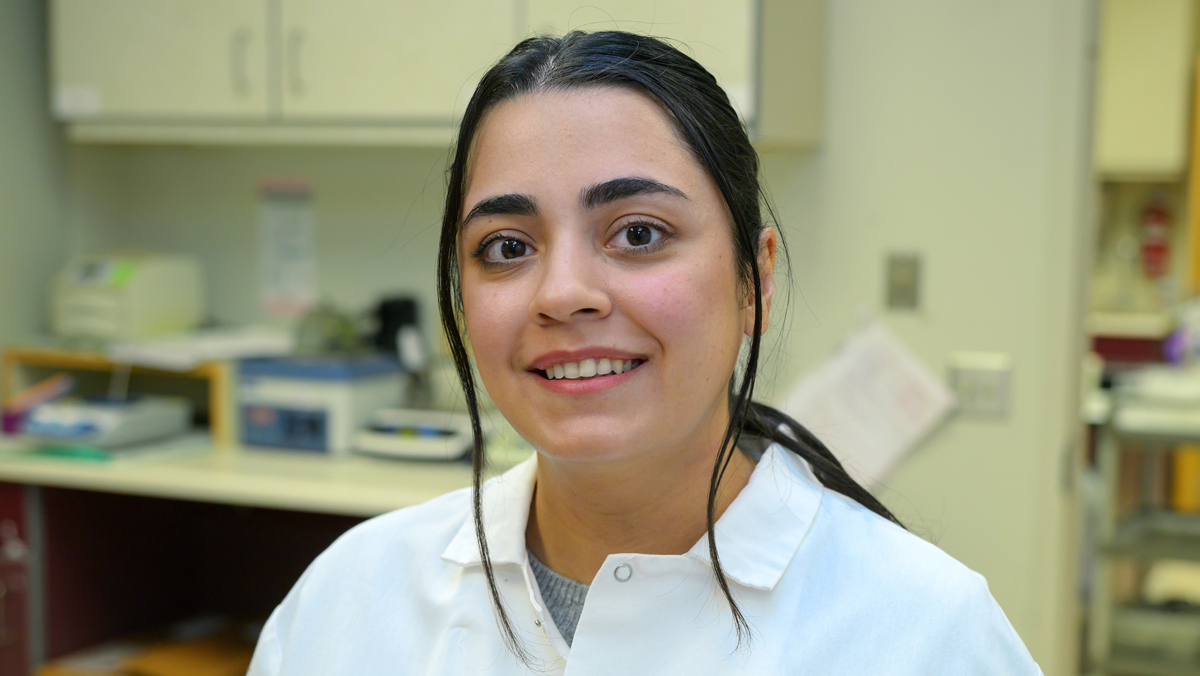
Nafise Noroozi, PhD Candidate, Department of Veterinary Microbiology & Pathology, Washington State University – Advisor: Dr. Troy Bankhead
TITLE: Repression of OspC Expression by sRNA SR0726 in Borrelia burgdorferi
ABSTRACT: Borrelia burgdorferi (Bb), the causative agent of Lyme disease, must rapidly regulate gene expression while transitioning between tick and mammalian hosts. OspC is essential for early mammalian infection but is highly immunogenic and must later be repressed. We hypothesized that the lp17-encoded sRNA SR0726 contributes to host adaptation by repressing ospC expression. Wild-type, SR0726-deficient (Δ726), and SR0726-upregulated (726up) strains were compared in vitro and under mammalian host-adapted conditions using ddPCR, Western blotting, and dialysis membrane chambers. All strains grew robustly in vitro. During mid-log growth at 37°C and after a 23°C-to-37°C temperature shift, Δ726 showed increased ospC transcript and OspC protein levels, whereas 726up showed reduced expression. Similar SR0726-dependent regulation was observed in DMCs. Importantly, 726up was not recovered from infected mice, whereas wild-type Bb infected both C3H and SCID mice. These results support SR0726-dependent regulation of OspC and mammalian infectivity in vivo.

Sudiksha Pandit, PhD Candidate, Department of Veterinary Microbiology & Pathology, Washington State University – Advisor: Dr. Santanu Bose