Community Engagement in Arts and Humanities: A Graduate Student Series
About the event
In this lecture series, graduate students will present the publicly engaged projects that they completed with funding from the David G. Pollart Center for Arts and Humanities at WSU. “Myths We Carry, Languages We Live”
“Myths We Carry, Languages We Live” was an event in summer 2026 made possible through the generous support of the David G. Pollart Center for Arts and Humanities through the Publicly Engaged Fellows Program at Washington State University. It was in the Terrell Library Atrium and was open to the public. The project explored myths and mythology from different countries and cultures and how these stories transfer cultural knowledge, norms, and values to the next generation, turning pain and suffering into hope and creating a space for shared human concerns to inspire the next generations. In a series of sessions, participants were invited to listen to myths from around the world and reflect on their connections with language, culture, and lived experience. The presentation will cover the project’s objectives and methodology, reflect on the experience of introducing mythology into a common university space, and explore the possibilities for using storytelling to promote intercultural dialog and community participation.
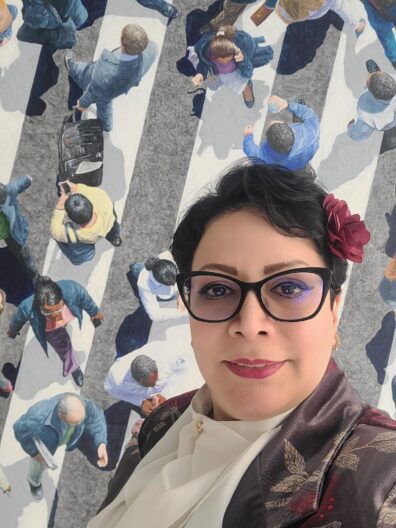
Golrokh Rose Maleki is a PhD student in Language, Literacy, and Technology at Washington State University. She has been teaching English for 23 years and has worked with learners from many different linguistic and cultural backgrounds. Her research interests include critical discourse studies, language education, gender representation, and culturally sustaining pedagogies. Having lived in different countries and experienced diverse cultures, she believes in the power of human connection, education, and shared experiences to help people move beyond merely surviving to truly thriving.
Palouse Resilience Project: A Political Pilot Program and Native Food Forest Initiative at a Land Grant University
Contemporary public universities, especially Land Grant Institutions, are contested landscapes. The history of the Land Grant University system originates with the Morrill Act, which seized 10 million acres of Native American land to displace inhabitants and replace them with the institutions we know today. These institutions frequently manage critical student needs through individualized, temporary relief. On the WSU campus, this looks like a food pantry, which relies on purchasing increasingly expensive goods and unpredictable donations. These universities maintain physical grounds through extractive, top-down maintenance regimes without seriously considering landscape health when choosing flora. The Washington State University (WSU) Native Food Forest Initiative intervenes in this dynamic by reframing university land as an active civic commons, transforming an operational liability into a participatory political project of localized food sovereignty and institutional co-governance. Situated at the intersection of public policy, pragmatic municipal engagement, and ecological restoration, this initiative models a collective-action framework that directly connects grassroots student advocacy, campus labor, municipal coalitions, and state-level policy formation. Centering our pilot between triangulated on-campus housing locations–Chief Joseph, Nez Perce, and Yakama Village Housing complexes– the project challenges conventional administrative silos by uniting WSU affiliated residents, regional non-profits, city partners, and WSU facilities services in a shared stewardship compact. Grounded in Robert Figueroa’s Bivalent Theory of Environmental Justice, this project connects action to the university’s land acknowledgement by replacing ornamental, chemical-reliant turf monocultures with culturally significant native edible polycultures and nitrogen-fixing perennials. The project additionally leverages the existing spatial ArcGIS mapping to establish transparent no-spray buffers and real-time foraging inventories while embedding barrier-free, dignity affirming food access directly into residential student paths, dismantling the stigma and administrative hurdles endemic to traditional charitable food distribution.
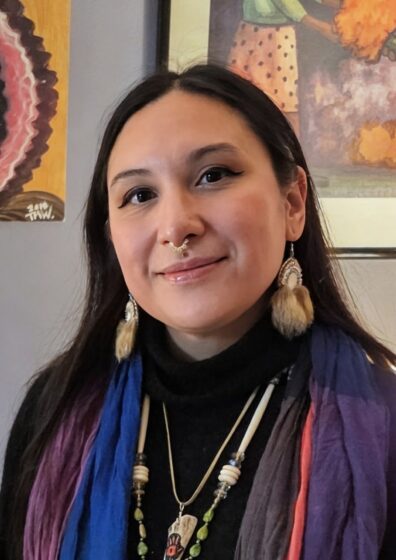
Shae Ortega is a 3rd year PhD student in the School of Politics, Philosophy, and Public Affairs with interests in political philosophy and policy. They employ Jane Addams’ pragmatic philosophy of civic activism and a commitment to social improvement through cooperative efforts. Their work is additionally guided by Robert Figueroa’s bivalent theory of environmental justice and Willie Ermine’s theoretical framework of the ethical space. They are also a mother of two fierce, creative children and the royal subject of their domestic shorthair: Queen Calypso Dusk Eater-of-Men. Ortega enjoys painting, singing, playing the fiddle, dancing, and cavorting about the fruit bearing plants of the Palouse.