Advances in Immunology and Microbiology Seminar Series
About the event
Featuring research in the areas of:
Epidemiology | Infectious Disease | Disease Ecology | Drug Discovery | Virology |
Global Health | Vector-Borne Disease | Pathology
The Advances in Immunology & Microbiology seminar series is a weekly forum that brings together scientists from diverse fields and disciplines across the College of Veterinary Medicine to discuss research advances in the broad areas of immunology, microbiology, infectious diseases, and global health. Seminars feature student speakers from the Immunology & Infectious Disease (IID) doctoral program, IID-affiliated postdoctoral researchers and faculty, intramural speakers from across the university, and extramural speakers.
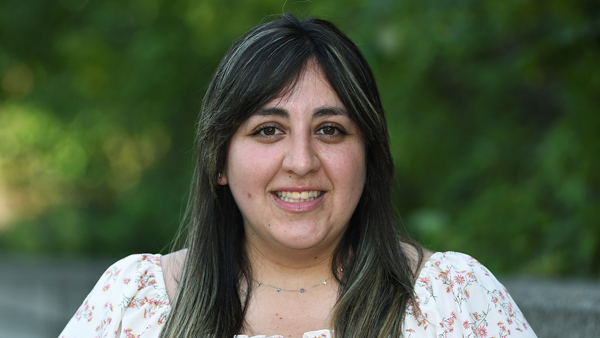
PRESENTER: Andrea Gomez, PhD candidate (Mentor: Dr. Arden Baylink)
TITLE: A novel strategy for antibacterial medicines against the gastric pathogen Helicobacter pylori through inhibition of alkyl hydroperoxide reductase C (AhpC)
ABSTRACT: Helicobacter pylori is a human stomach pathogen and causative agent of gastric cancer, a leading cause of cancer death. Multidrug-resistant strains have become prevalent, and treatment failure is common, necessitating the development of new clinical tools for managing infections. For colonization, H. pylori requires alkyl hydroperoxide reductase C (AhpC) to eliminate hydroperoxides (ROOH) and resist oxidative stress generated through innate immunity. AhpC undergoes a large conformational change during its catalytic cycle from a fully folded active conformation to a locally unfolded inactive conformation. We used a structure-guided drug discovery approach to exploit our knowledge of the structure of AhpC to identify drug-like small molecules that trap the enzyme in its inactive conformation, leading to bacterial killing. I will share the characterization of the properties of these compounds that lay the foundation for future cell culture and in vivo studies to develop these inhibitors as antibacterial medicines against H. pylori infections.

PRESENTER: Hayley Masterson, DVM, Clinical veterinary microbiology resident and PhD candidate (Mentors: Dr. Claire Burbick, VMP and Dr. Massaro Ueti, MPID program).
TITLE: A Love Triangle: Breaking the codependent relationship between B. bovis, Cattle, and the R. microplus tick.
ABSTRACT: The parasite Babesia bovis is an intraerythrocytic parasite of cattle that relies on its R. microplus tick vector and bovine host to complete its life cycle. The sporozoite stage is the first parasitic life stage cattle encounter. Babesia bovis sporozoites are transmitted into the bloodstream as the R. microplus tick feeds. Sporozoites invade bovine erythrocytes, form merozoites, and cause lysis of bovine erythrocytes. This results in significant clinical disease. Current control strategies have limited efficacy. Characterizing important sporozoite proteins may reveal novel targets for vaccine development. Preventing erythrocyte invasion is critical to breaking up the relationship between parasite and host. Unfortunately, little is known about B. bovis sporozoites.
To most effectively disrupt the love triangle, we must first isolate and characterize B. bovis sporozoites. We have developed a method to successfully isolate viable sporozoites utilizing an in vitro tick-feeding system. Successful isolation of live sporozoites has allowed us to begin working towards identifying important invasion proteins that can be targeted with antibodies to prevent erythrocyte invasion. Preventing invasion will allow us to effectively sabotage the relationship between parasite and erythrocyte.