The School of Mechanical and Materials Engineering Seminar Series, “United States Transuranium and Uranium Registries: The Story of Human-Based Radiation Research” Presented by Dr. Sergey Y. Tolmachev
About the event
United States Transuranium and Uranium Registries: The Story of Human-Based Radiation Research
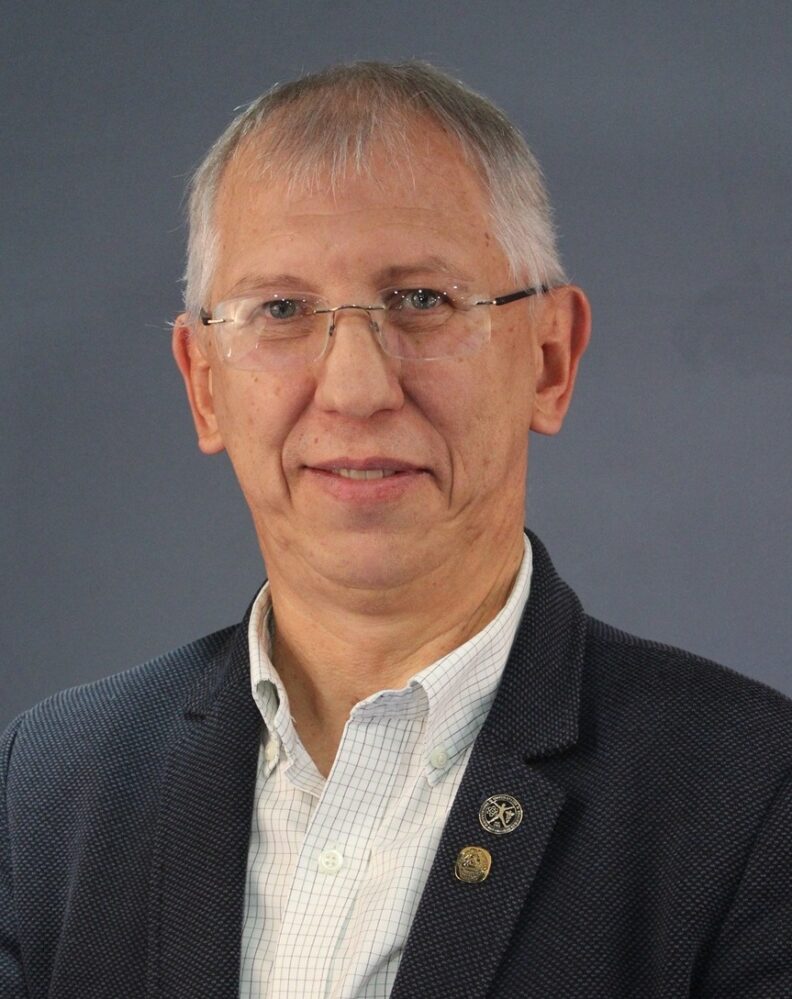
Presented by Dr. Sergey Y. Tolmachev, Research professor in the College of Pharmacy and Pharmaceutical Sciences, Washington State University; Director of the United States Transuranium and Uranium Registries, Richland, WA
Abstract
The United States Transuranium and Uranium Registries (USTUR) was established in 1968 as the Plutonium Registry by the Atomic Energy Commission. For nearly six decades, USTUR has served as a national resource for human-based radiobiological research.
Today, USTUR’s research focuses on: (1) modeling actinide biokinetics; (2) characterizing actinide distribution in the human body; (3) quantifying uncertainties in radiation dose assessment and associated health outcomes; and (4) investigating occupational exposure to non-radioactive materials associated with the nuclear industry.
This lecture will review the historical milestones, scientific contributions, and major research achievements of the USTUR.
Biography
Sergey Y. Tolmachev is a research professor in the College of Pharmacy and Pharmaceutical Sciences at Washington State University and director of the United States Transuranium and Uranium Registries.
Dr. Tolmachev is an expert in radiochemistry, analytical measurement techniques, actinide biokinetics, with more than 30 years of experience in radionuclide measurements in environmental and biological samples, radiochemical analysis of actinides, and biokinetic modeling of internally deposited radionuclides.
He received an Engineer’s Diploma (equivalent to an M.S.) in nuclear-chemical technology, with specialization in radiochemistry, from the Mendeleev University of Chemical Technology of Russia (Moscow, Russia), during which he conducted research at the Joint Institute for Nuclear Research, Flërov Laboratory of Nuclear Reactions (Dubna, Russia). He earned a Ph.D. (Doctor of Science) in chemistry and physics of condensed matter, with specialization in radioecology, from Kyushu University (Fukuoka, Japan), and completed postdoctoral training at the Japan Atomic Energy Research Institute (Tokai-mura, Japan) and the National Institute of Radiological Sciences (Chiba, Japan).
Dr. Tolmachev’s research interests include radiation protection, radiation epidemiology, radioecology, radiochemistry, nuclear analytical techniques, internal dosimetry, biokinetic modeling, and radiation measurement and mass spectrometric techniques. He has authored more than 80 peer-reviewed publications.
Dr. Tolmachev chaired the radiochemistry team of Council Committee 2 of the National Council on Radiation Protection and Measurements (NCRP) and served as vice chair of NCRP Scientific Committee 6-12 on brain dosimetry. He also served on the U.S. Scientific Review Group for the Department of Energy’s Russian Health Studies Program.
He is a council member of NCRP and an expert member of NCRP Program Area Committee 6 on Radiation Measurements and Dosimetry. Dr. Tolmachev serves as chair of the Subcommittee for Research of the Beryllium Health and Safety Committee (BHSC). He is a member of the Washington State Academy of Sciences (WSAS) and serves on the board of trustees of the Herbert M. Parker Foundation. Internationally, he is a member of the European Radiation Dosimetry Group (EURADOS) and serves on the editorial board of the Japanese Journal of Health Physics.
Dr. Tolmachev is a fellow of the Health Physics Society.