The School of Mechanical and Materials Engineering Seminar Series, “Beyond p-Type: The Potential of n-Type CdTe and CdSeTe for Next-Generation Solar Cells” Presented by Jing Shang
About the event
Beyond p-Type: The Potential of n-Type CdTe and CdSeTe for Next-Generation Solar Cells
Presented by
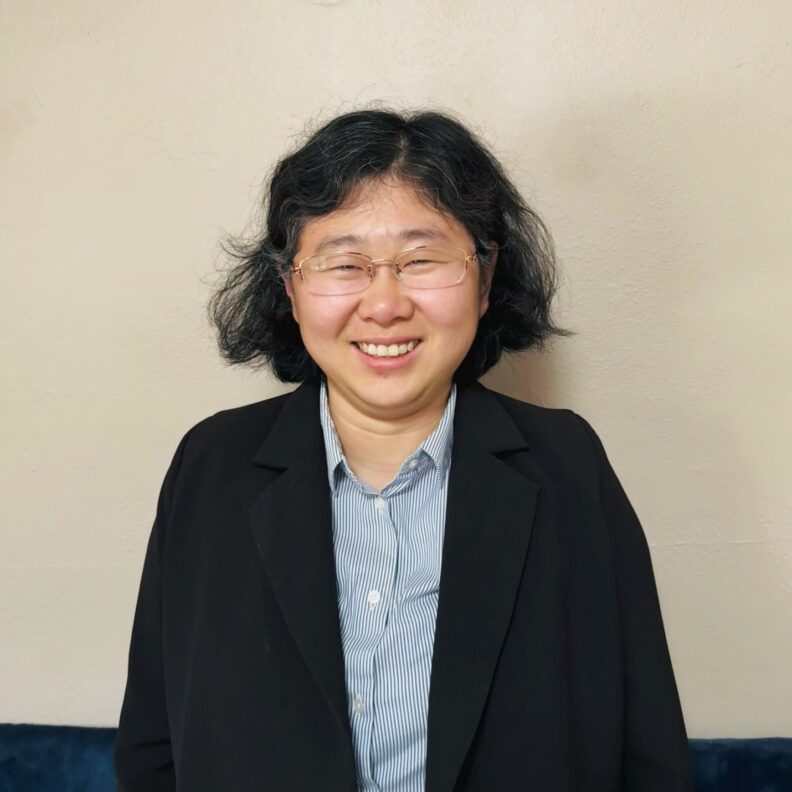
Jing Shang, PhD candidate in Materials Science and Engineering, Center of Crystal Growth and Semiconductors and Institute of Materials Research, School of Mechanical and Materials Engineering, Washington State University
Abstract
Cadmium telluride (CdTe) solar cells have become a leading thin-film photovoltaic technology due to their low cost, high efficiency, and scalable manufacturing. Despite recent progress—pushing efficiency to 22.3%—current p-type CdTe devices remain well below their theoretical Shockley–Queisser limit of ~32%, highlighting significant untapped potential. Historically, efforts to improve p-type CdTe, such as alloying with CdSeTe and introducing group-V dopants, have delivered only incremental gains. A promising new direction is to explore n-type CdTe absorbers, drawing inspiration from the silicon photovoltaic industry, where a transition from p-type to n-type devices enabled record efficiency gains. n-Type CdTe offers potential benefits including reduced recombination losses, higher tolerance to impurities, and longer carrier lifetimes, which could help overcome key limitations of current technology. This seminar will discuss the status of p-type CdTe devices, examine the opportunities and challenges of developing n-type CdTe and CdSeTe materials, and highlight how this paradigm shift could pave the way for next-generation high-efficiency CdTe solar cells.
Biography
Jing Shang is a Ph.D. candidate in Materials Science and Engineering at Washington State University, advised by Prof. John McCloy. Her research focuses on advancing cadmium telluride (CdTe) and cadmium selenium telluride (CdSeTe) single-crystal photovoltaics, with support from the U.S. Department of Energy’s CdTe Accelerator Consortium (CTAC). She has synthesized high-quality iodine-doped CdTe crystals, investigated deep-level defects using advanced techniques such as thermoelectric effect spectroscopy (TEES), Hall effect, and photoluminescence, and fabricated prototype solar devices to evaluate performance. Her work also explores p-type and n-type CdSeTe, focusing on their electrical and optical properties and the impact of annealing.
Before beginning her doctoral studies, Jing gained extensive industry experience as an engineer at Teradyne, and SanDisk, developing semiconductor testing and packaging solutions for global technology companies. She has authored multiple peer-reviewed publications in Journal of Alloys and Compounds, Journal of Electronic Materials, and Journal of Applied Physics. Her contributions have been recognized with numerous honors, including the VCEA Dissertation Award, Outstanding 3-Minute Thesis Award, and several endowed scholarships at WSU. In addition, her research was selected for a CTAC Small Project Award in 2023, providing funding to further explore innovative directions in CdTe and CdSeTe photovoltaics.