The School of Mechanical and Materials Engineering Seminar Series, “Distributed Quantum Computing with Neutral Atoms and Photons” Presented by Dr. Yefeng Mei
About the event
Distributed Quantum Computing with Neutral Atoms and Photons
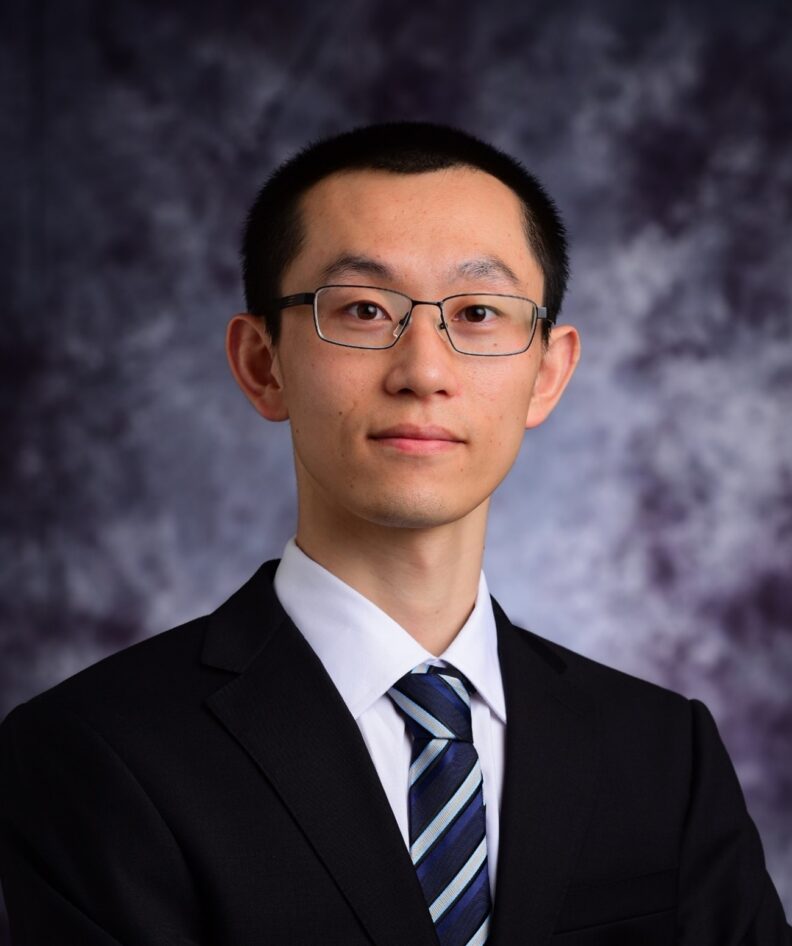
Presented by Dr. Yefeng Mei, William Band Distinguished Assistant Professor of Physics, Department of Physics and Astronomy, Washington State University
Abstract:
A distributed quantum network requires three key ingredients: qubits, quantum logic for entanglement generation and correction, and interaction interfaces. Neutral atom qubits with long coherence times and controllable interactions are thus excellent candidates for quantum information storage and processing, whereas single-photon qubits are faithful carriers of quantum information as they travel fast and interact very weakly with the environment. In this talk, I will discuss the collective atomic qubits in a Rydberg ensemble held in a state-insensitive optical lattice trap. Both excitation blockade and spin-wave dephasing can contribute to the suppression of multiple excitations, allowing for deterministic preparation of collective atomic qubits and on-demand single photons. On the other hand, with an electromagnetically-induced-transparency-assisted spontaneous four-wave mixing process, we can generate energy-time entangled nonclassical photon pairs and narrowband heralded single photons, which are particularly suitable for photon-atom interaction interfaces. In the end, I will also talk about how to design a quantum network architecture in which cold atom ensembles with strong atom-light interactions act as quantum antennas, interfacing single-atom qubits with flying photons to enable high-efficiency atom-photon entanglement generation. Our approach leverages the complementary strengths of single-atom qubits for computation and cold atomic ensembles for networking, paving the way for large-scale distributed quantum computing and sensing.
Biography:
Dr. Yefeng Mei has been the William Band Distinguished Assistant Professor of Physics at Washington State University since 2023. Prior to that, he was a postdoctoral research fellow at the University of Michigan. He earned his Ph.D. in physics from the Hong Kong University of Science and Technology. Dr. Mei’s research focuses on experimental atomic, molecular, and optical (AMO) physics, particularly leveraging trapped neutral atoms and their highly excited Rydberg states to investigate quantum optics, quantum sensing, many-body physics, and scalable quantum information systems. He has published 15 peer-reviewed papers, including 8 in Physical Review Letters and 1 in Optica, and actively serves as a reviewer for PRL, PRA, PR Applied, Scientific Reports, Optics Letters among others. He is also a Review Editor for Frontiers in Physics. In 2025, Dr. Mei received the WSU New Faculty Seed Grant to support his research on distributed quantum computing using neutral atom platforms.