The School of Mechanical and Materials Engineering Seminar Series, “HYPER-Safe: An integrated design and safety-planning process” Presented by Dr. Jacob Leachman
About the event
HYPER-Safe: An integrated design and safety-planning process
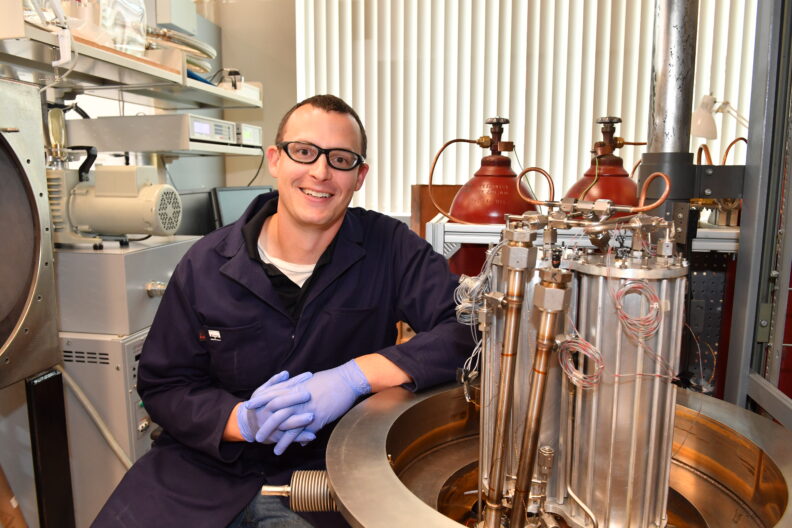
Presented by Dr. Jacob Leachman, Professor, School of Mechanical and Materials Engineering, Washington State University
Abstract
Safety is the primary resource granting us time; we will not eat, sleep, or research in imminent danger. However, the successes of modern engineering have allowed us to become negligent of this core principle. As researchers, safety is particularly challenging because everything we do is one-off for the first time; that’s the point! So, it’s all too common for safety to be an afterthought with the increasing complexity of research and distractions. In this seminar, we’ll take a ride through HYPER’s safety planning journey from a day when my research career could have ended, through the development of the HYPER-Safe process, to today where world-leading companies are sending their engineers to intern with us to learn this system. I’ve learned that when done well, safety leads to increased performance by delivering more work on time, with less re-design, and fewer pauses in testing. Moreover, you have an incredible strategic advantage when approved to safely and officially proceed with research that most universities do not think is possible.
Attending this seminar will give you an important start on the Safety Plans that the MME Safety Committee will utilize during mandatory lab inspections later this year.
Presenter Biography
Jacob Leachman is a Professor in the School of Mechanical and Materials Engineering at Washington State University (WSU). He initiated the Hydrogen Properties for Energy Research (HYPER) Center at WSU in 2010 with the mission of working with hydrogen safely so that others can too. To this day the HYPER Center remains the only US academic laboratory focusing on cryogenic hydrogen. He earned a B.S. degree in Mechanical Engineering in 2005 and a M.S. degree in 2007 from the University of Idaho. His master’s thesis has been adopted as the foundation for hydrogen fueling standards and custody exchange, in addition to winning the Western Association of Graduate Schools Distinguished Thesis Award for 2008. He completed his Ph.D. in the Cryogenic Engineering Laboratory at the University of Wisconsin-Madison in 2010. He is the lead author of the textbooks “Thermodynamic Properties of Cryogenic Fluids: 2nd Edition” and “Cool Fuel: The Science and Engineering of Cryogenic Hydrogen”. He is a recipient of the Roger W. Boom Award from the Cryogenic Society of America.