CHE 598 Seminar: In Search of Metastable Complex Surface Oxides on Metals With Data-Driven Artificial and Natural Intelligence Inspired In Silico Experiments
About the event
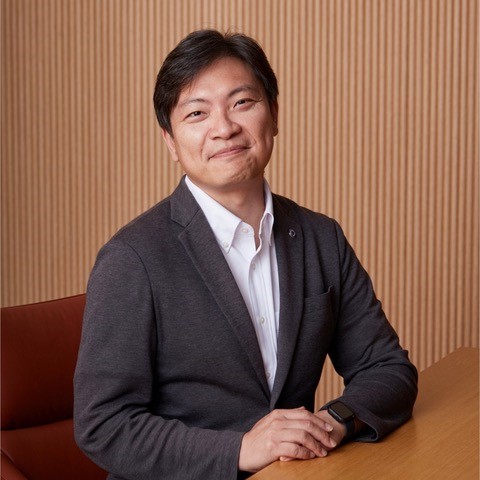
SPEAKER: Dr. Aloysius Soon, Professor of Materials Theory & Design, Department of Materials Science & Engineering, Yonsei University, Seoul Republic of Korea
BIOGRAPHY:
Professor Aloysius Soon obtained his BSc in Chemistry from the National University of Singapore, his MSc in Chemistry from the University of Auckland, and his PhD in Physics from the University of Sydney. Since 2010, Professor Soon has been a faculty member in the Department of Materials Science and Engineering at Yonsei University in Seoul, Republic of Korea, and he was awarded a tenured full professorship in 2020. Prior to joining Yonsei, he was an Alexander von Humboldt fellow at the former Theory Department (now the NOMAD Laboratory) of the Fritz-Haber-Institut der Max-Planck-Gesellschaft in Germany. Professor Soon’s research focuses on acquiring a fundamental understanding of the chemistry and physics of complex materials and their surfaces/interfaces using first-principles electronic structure theory coupled with modern machine-learning methods. Notably, Professor Soon has been elected as a Fellow of both the Institute of Physics (FInstP, UK) and the Royal Society of Chemistry (FRSC, UK), and is registered as a Chartered Scientist (CSci, UK).
ABSTRACT:
Understanding the growth (and characterization) of low-dimensional nanomaterials on metal substrates has drawn a lot of interest over the last few decades as a result of the vast improvements in the resolution of surface spectroscopic and microscopic measurements. Alongside this progress in nanoscale characterization, computer simulations have also successfully provided important key insights to complement experimental observations via data driven theory-guided atomistic modeling. However, a close comparison/agreement between experiment and theory for the characterization of these supported ultrathin nanomaterials is still a huge technical challenge. To address these technical issues, using an elusive metastable O/Cu surface oxide as an example, we demonstrate how the complementary use of both artificial and natural (collective) intelligence algorithms can provide the very-much-needed data-informed global optimization solution to elucidate the actual atomic structure of novel nanostructures on metal substrates.