CHE 598 Seminar: Toward An Atomistic Understanding Of Metal Oxide Surface Chemistry
About the event
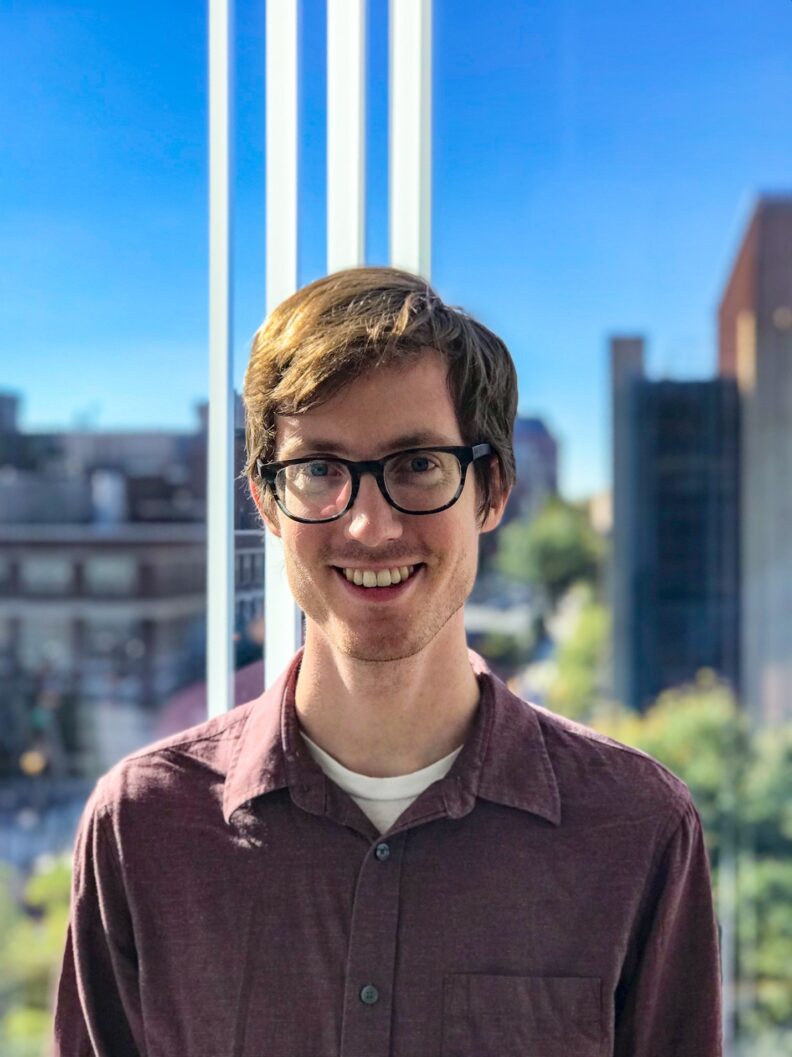
SPEAKER: Dr. Colin Lehman-Chong, Teaching Assistant Professor, WSU Voiland School of Chemical Engineering and Bioengineering
BIOGRAPHY:
After completing his BS in Chemical Engineering at the University of Tulsa in 2014, Colin Lehman-Chong worked as a process engineer designing gas processing facilities in Oklahoma, Texas, North Dakota, and Utah. He graduated from the University of Pennsylvania with his PhD in 2023 where his research focused on using density functional theory to model electrochemical systems and develop physics-based models for adsorption on oxide surfaces. Since joining the Voiland School of Chemical Engineering and Bioengineering in the fall of 2023 as a Teaching Assistant Professor, Colin has taught the capstone chemical engineering course sequence and worked to increase the number of industry partnerships available for this course and for the school. He also teaches chemical process safety and was the recipient of a Smith Teaching and Learning Grant in the spring of 2024 for his proposal to design a new project-based-learning module to improve student outcomes.
ABSTRACT:
The role that ab initio methods including density functional theory have played in developing our understanding of catalysis on transition metal surfaces cannot be understated. The addition of oxygen to the lattice, however, dramatically changes the stability and reactivity. Physics-based models describing even the simplest adsorption phenomena are lacking for these important metal oxide materials. This talk will build from discussions of oxides as applied to electrochemical ammonia synthesis and carbon capture to the derivation of a physics-based adsorption model for small atoms on perovskite and rutile oxide surfaces.
Perovskite oxide BaZrO3-based ceramic electrolytes are used in high temperature electrochemical ammonia synthesis. Microkinetic modeling of ammonia synthesis at the interface of these oxide electrolytes and metallic catalysts leads to the proposal of new methodologies for improving selectivity to electrochemically synthesized ammonia at elevated temperatures. The dissolution rates of Mg and Ca from oxides are key to unlocking abundant mineral oxides for carbon capture. Using results from ab initio steered molecular dynamics, the dissolution rates of these cations are shown to be surface facet dependent. Finally, to help reduce the inherent complexity of oxide materials, a model for predicting the hybridization energy due to interactions between adsorbates and metal oxide surfaces is presented, pointing out the key electronic structure features dictating the strength of this adsorption interaction.