CHE 598 Seminar: Advancing One Water Approach Through Big Data For Microbial Water Quality
About the event
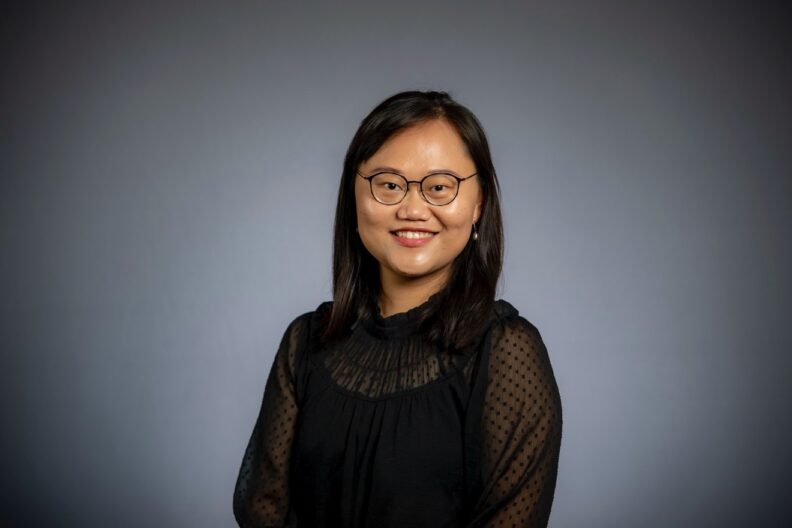
SPEAKER: Dr. Huiyun Wu, Assistant Professor, Department of Civil and Environmental Engineering, WSU
BIOGRAPHY:
Dr. Huiyun Wu is an Environmental Engineer specialized in microbial water quality research. Currenting serving as an Assistant Professor in the Department of Civil and Environmental Engineering in VCEA at Washington State University, Dr. Wu received a M.S. and Ph.D. in Environmental Engineering from Michigan State University. Following the doctoral studies, Dr. Wu undertook a two-year Oak Ridge Institute for Science and Education (ORISE) fellowship with the U.S. Environmental Protection Agency (EPA) in Research Triangle Park, North Carolina and a two-year Postdoc fellowship in Environmental Health at Tulane University. Dr. Wu’s research is focused on data-driven strategies for advancing water sustainability, molecular and computational microbiology applications, and environmental microbiome investigations. Dr. Wu has worked on multiple interdisciplinary research projects, including water reuse, wastewater-based epidemiology, sanitary sewage overflow survey, environmental metagenomics, microbial source tracking, stormwater management, and microbial water quality modeling. Dr. Huiyun Wu has passed the Fundamentals of Engineering (FE) and Principles and Practice of Engineering (PE) exams in Environmental Engineering and is pursuing a PE license.
ABSTRACT:
Microbial water quality research is a primary public health intervention that protects communities from exposure to contaminated water and prevent disease. With accelerating climate change, increasing urbanization, global viral diseases outbreaks, and disparity of resources among communities, new water microbial quality problems have arisen, and old problems have intensified. Communities facing the shortage of reliable water resources also face waterborne pathogens when switching to new water sources. Further, the aging water treatment infrastructures are struggling to maintain safe, quality water. Left unchecked, these problems have far-reaching harmful effects on public and environmental health. My focus in microbial water quality research has been on pioneering science- and engineering-based methods to detect waterborne pathogens rapidly, quantitatively, and reliably. My goal is to establish a systematic science and engineering program that addresses environmental needs and sustainability particularly emphasizing environmental microbiology, computational approaches, and their application in climate change adaptation and the built environment. My future research aims to build on this foundation, expanding novel environmental microbiology tools and leveraging bioinformatics and data science to address environmental sustainability needs by addressing 1) advancing sample processing and molecular methods for water reuse; 2) investigating environmental microbiomes for virus-host interactions; 3) enhancing water quality protection in response to extreme events.