CHE 598 Seminar: Advancing Sustainable Biotechnology and Medicine by Metabolic Engineering
About the event
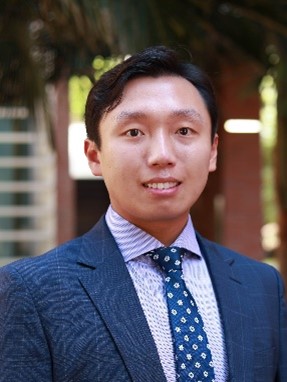
SPEAKER: Dr. Junyoung Park, Assistant Professor, Department of Chemical and Biomolecular Engineering, University of California, Los Angeles
BIOGRAPHY:
Junyoung Park is an Assistant Professor of Chemical and Biomolecular Engineering and Co-Director of the Metabolomics Center at University of California, Los Angeles. His research group is interested in systems biology and metabolic engineering. His lab has dual research goals: to elucidate metabolic regulation in microbes for sustainable bioproduct synthesis; and to quantify the plasticity and the compatibility of cancer and immune cell metabolism for discovery and potentiation of cancer therapy. His research accomplishments include the conversion of CO2 into biofuels (biodiesel and bio-aviation fuel) and specialty chemicals derived from (non)natural products by engineering microbial metabolism. His recent awards include NIH Maximizing Investigators’ Research Award (MIRA), Hellman Fellowship, and UCLA Faculty Career Development Award. Before moving to Los Angeles, he conducted postdoctoral research at MIT. He received his bachelor’s degrees in Mathematics and Bioengineering from UC San Diego and master’s and Ph.D. in Chemical Engineering from Princeton University.
ABSTRACT:
Metabolism is a complex network of biochemical reactions. Interestingly, the structures of metabolic networks are conserved across widely divergent organisms from bacteria to humans. Metabolite concentrations and fluxes are the fundamental descriptors of the state of metabolic networks. The former provides kinetic and thermodynamic insights into metabolism, and the latter provides actionable information for engineering metabolism. The advancement of analytical tools such as mass spectrometry and nuclear magnetic resonance spectroscopy has enabled comprehensive and sensitive quantitation of metabolites. However, a gap remains between metabolite measurement and rational engineering of metabolism. My lab aims to bridge the gap. Using liquid chromatography-mass spectrometry (LC-MS), stable isotope tracing, and mathematical modeling, we quantitatively map metabolism, learn regulatory mechanisms, and design engineering strategies. In this talk, I will highlight our recent investigation into metabolism in the context of evolution, immunotherapy, and CO2 upcycling.