CHE 598 Seminar: Alkane Oxidation on IrO2(110): Mechanistic Insights and Surface Tuning
About the event
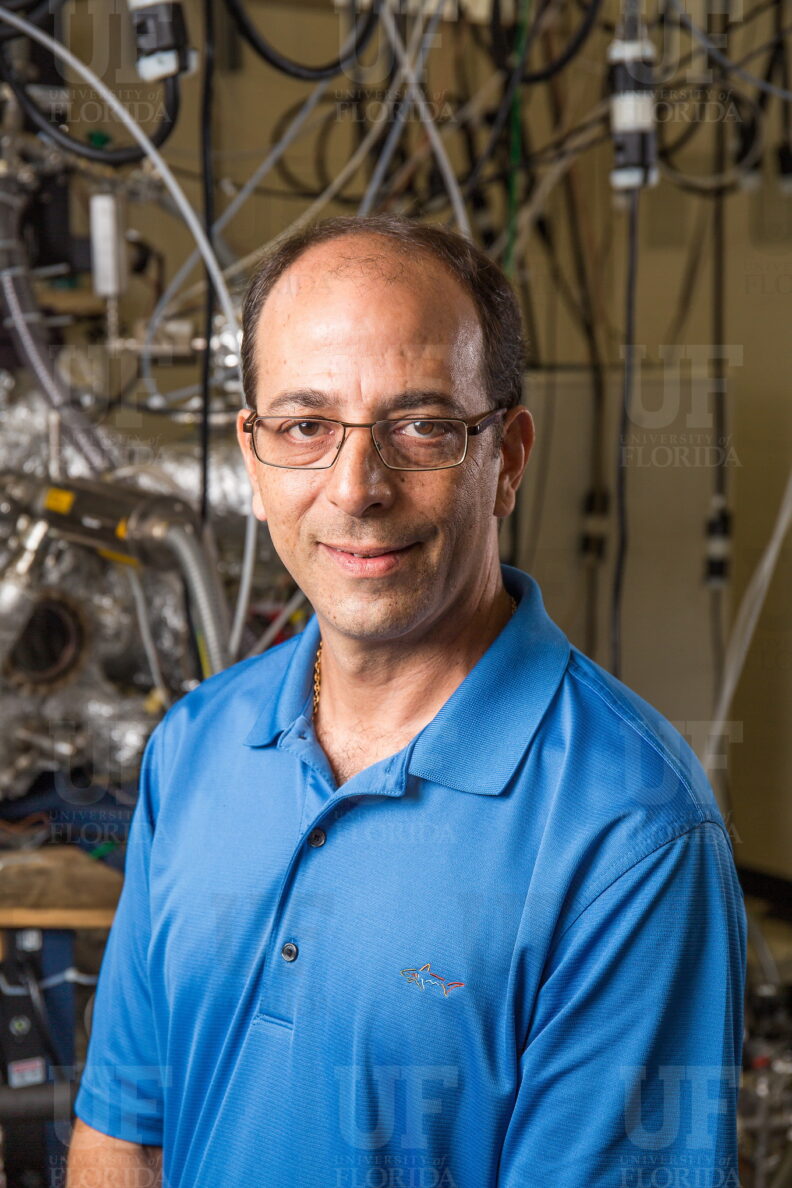
SPEAKER: Dr. Jason Weaver, Professor, Department of Chemical Engineering, University of Florida.
BIOGRAPHY:
Jason Weaver earned a Ph.D. degree from Stanford University in 1998, under the guidance of Professor Robert Madix. He joined the faculty at the University of Florida in 1999, where he is currently the Dow Chemical Company Foundation Professor of Chemical Engineering, and an Affiliate Professor of Chemistry. Prof. Weaver’s research interests are in heterogeneous catalysis and the chemistry and physics of solid surfaces. His research aims to develop a molecular-level understanding of surface catalyzed reactions through application of ultrahigh vacuum and in situ surface analysis methods as well as molecular simulations. Specific topics of focus include the growth and surface chemistry of late transition-metal oxides, mixed-metal oxides, inverse catalysts and dilute alloy surfaces, and the oxidation chemistry of small molecules particularly alkanes. He is a Fellow of the American Vacuum Society (2016) and has published over 130 peer-reviewed articles
ABSTRACT:
Developing catalysts that can efficiently convert light alkanes to value-added products is critical to achieving global decarbonization and could have a transformative impact on the chemical industry. Catalytic combustion also remains vital for mitigating the release of harmful compounds in power generation applications that utilize natural gas. In this talk, I will discuss our investigations of alkane oxidation on IrO2(110) thin films, spanning studies in ultrahigh vacuum and catalytic conditions. I will begin by discussing the growth of IrO2(110) films, and our discovery of low temperature C-H activation of light alkanes (C1-C3) on IrO2(110), along with the subsequent oxidation chemistry. I will then highlight the catalytic kinetics of alkane oxidation on IrO2(110) at near-ambient pressures, the surface intermediates revealed by operando spectroscopy, and how these observations have enabled the development of first-principles microkinetic models that clarify how kinetic behavior is mediated by different surface species. Lastly, I will discuss our efforts to enhance the partial oxidation selectivity of IrO2(110) by substituting Cl into the surface and by synthesizing IrO2-based mixed metal-oxides. We find that IrxRu1-xO2(110) surfaces with tunable near-surface cation distributions can be synthesized in ultrahigh vacuum, and that adsorbate binding varies strongly with local cation arrangements, providing both a sensitive probe of binding-site motifs and a potential route for tailoring catalytic properties. The exceptional activity of IrO2(110) toward alkane C-H bond cleavage, along with the ability to manipulate the subsequent oxidation pathways, may provide new opportunities for developing IrO2-based catalysts that are capable of directly and efficiently transforming light alkanes to value-added products.