CHE 598 Seminar: Chemical Transient Kinetics in Studies of Catalytic Reaction Mechanisms, As Exemplified by the CO Hydrogenation Over Co-based Catalysts
About the event
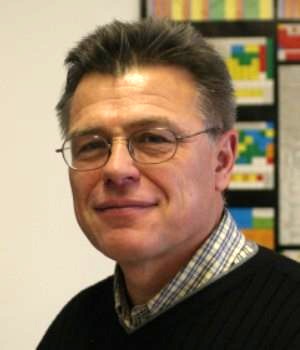
SPEAKER: Dr. Norbert Kruse, Emeritus Professor, WSU Voiland School of Chemical Engineering and Bioengineering
BIOGRAPHY:
Norbert Kruse graduated from the Technical University of Berlin, Germany, in 1976 in chemistry and chemical engineering. He then moved to the Fritz Haber Institute of the Max Planck Society in Berlin for a PhD thesis. After his thesis in early 1980 he prepared a habilitation to become a university lecturer in 1986. He then was a lecturer in Marseille, France, and moved to ETH Zurich, Switzerland, in 1988 before accepting a full professorship in Brussels (ULB), Belgium, in 1994. Since then, he has been the director of the institute for “Chemical Physics of Materials” and President of the Department of Chemistry at ULB from 2004 to 2006. In 2013 he was appointed Voiland Distinguished Professor at the Washington State University (WSU) and a Fellow of the Pacific Northwest National Laboratories of the USA. He has retired from WSU in 2023 and continues to be an Invited Professor at ULB. He served as an Editor-in-Chief of the Catalysis Letters and Topics in Catalysis from 2009 to 2013. From 2008 to 2014 he was the President of the International Field Emission Society and became an Inaugural Fellow of this Society since 2015. Besides other awards, he is a First Officer of the King of Belgium.
ABSTRACT:
This talk is aimed at providing a basic understanding of what heterogeneous catalysis is about and how complex kinetic phenomena can be experimentally addressed to elucidate catalytic reaction mechanisms. The importance of distinguishing between thermodynamic feasibility and kinetic constraints will be stressed by first investigating what might be considered a fairly simple reaction: the catalytic formation of water from hydrogen and oxygen. Different from expectations, this reaction may encounter major activation barriers in the absence of a catalyst but proceeds explosively in its presence. Very differently, the catalytic hydrogenation of carbon monoxide (“Fischer Tropsch synthesis”) to chain-lengthened hydrocarbons is a relatively slow, yet industrially important, process whatever catalyst material is being chosen. Surprisingly, this reaction may develop self-sustained rate and selectivity oscillations when using Co/CeO2 catalysts (1). It will be demonstrated how this fairly complex “non-linear” behavior can be investigated using Chemical Transient Kinetics (CTK) and how deep insight into the reaction mechanism can be gleaned from a Langmuir-Hinshelwood model involving CO repetitive insertion into surface O-H and O-R functional groups to initiate and maintain stepwise hydrocarbon chain growth.