CHE 598 Seminar: Dendrimer Nanostructures for Selective Cellular Targeting and Drug Delivery
About the event
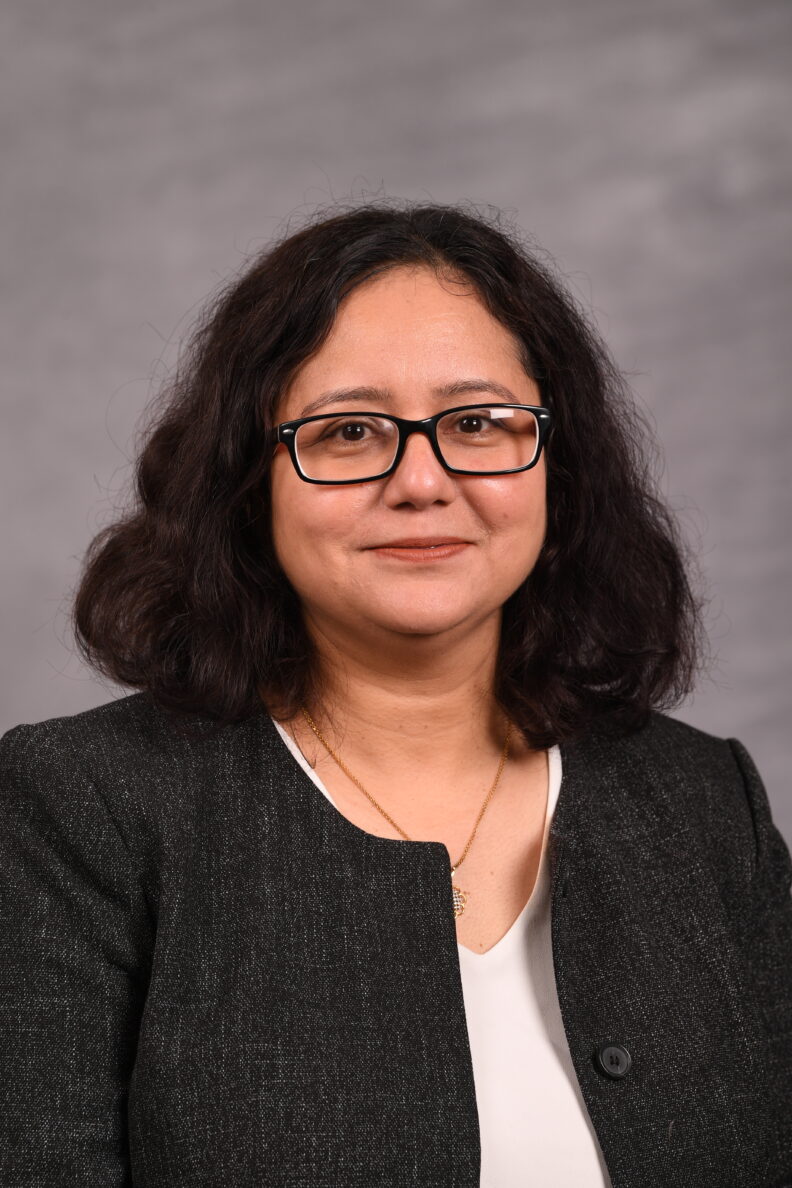
SPEAKER: Dr. Anjali Sharma, Assistant Professor, Department of Chemistry, WSU
BIOGRAPHY:
Dr. Anjali Sharma is an Assistant professor and the Director of Translational Nanomedicines Research Laboratory within the Department of Chemistry at Washington State University. She earned her Ph.D. in Materials Chemistry from McGill University and completed her postdoctoral training in Translational Nanomedicines at the Center for Nanomedicine at Johns Hopkins University School of Medicine. At Johns Hopkins, Dr. Sharma ascended to the role of Research Faculty Member, where her work focused on the development of targeted nanotherapies, particularly in addressing critical healthcare needs within central nervous system and inflammatory disorders. Her contributions played a pivotal role in advancing dendrimer-based drugs, some of which are now progressing through human clinical trials.
Transitioning to WSU, Dr. Sharma now leads the “Translational Nanomedicines Research Laboratory,” where her interdisciplinary research endeavors are aimed at developing rationally designed and clinically applicable nanostructures. Her primary objective is to engineer smart and scalable targeted therapies capable of traversing multiple biological barriers, thereby addressing unmet medical needs across a spectrum of diseases including cancer, brain and ocular disorders, and infectious diseases. Dr. Sharma has published over 50 scientific articles in peer-reviewed journals and is the inventor of more than 20 patents and invention disclosures. Her research is funded by the National Institutes of Health-National Cancer Institute, National Eye Institute, National Institute of Neurological Disorders and Stroke, Andy Hill Cancer Care Foundation, Murdock Trust, and Washington Research Foundation.
ABSTRACT:
Poor transport of therapeutics across various physiological barriers limits the development of effective treatment options for central nervous system and ocular disorders, cancer, and beyond. The primary challenge is achieving clinically relevant therapeutic exposure at the site of disease. This is often difficult to achieve due to physiological barriers such as blood brain barrier or blood tumor barrier, that are hard to overcome. Another challenge lies in selective delivery of drugs, like a magic bullet, to diseased cells or sub-cellular locations without impacting healthy cells or tissues, to enhance the efficacy of drugs and reduce systemic side-effects. Dendrimer nanoparticles have various attributes of this ‘magic bullet’ if designed rationally based on the disease. Learning from disease pathology, the focus of research in The Sharma Lab (Translational Nanomedicines Research Laboratory) is to develop clinically translatable nanostructures capable of overcoming multiple biological barriers for precise delivery of drugs. Our research focuses on creating minimally invasive, cell-targeted nanomaterials using simple yet effective designs, biocompatible building blocks, and cost-efficient starting materials while leveraging highly efficient chemical transformations. This talk will provide insights into our ongoing efforts to develop rationally designed, scalable, disease-directed nanomedicines for targeted drug delivery and imaging applications, addressing critical unmet clinical needs.