CHE 598 Seminar: Engineering A Mimetic Environment For Articular Cartilage Production
About the event
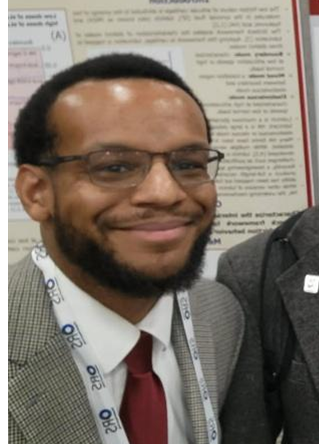
SPEAKER: Terreill Robertson, PhD candidate, WSU Voiland School of Chemical Engineering and Bioengineering
BIOGRAPHY:
Terreill Robertson is a Chemical Engineering PhD candidate in the VSCEB Department at WSU. He obtained his BS degree in Chemistry from Morehouse College, located in Atlanta, GA, in 2020. During his undergraduate career, Terreill joined Dr. Juana Mendenhall’s lab group which focused on functionalizing and characterizing tri-component hydrogels for alleviating cell inflammation. Terreill started his PhD in 2020 at WSU under the guidance of Dr. Bernard Van Wie. He currently works on recapitulating fluid dynamics to optimize developing bioprocess studies and performing molecular biology techniques to characterize synthetically manufactured articular cartilage within a novel multichambered Tissue BioReactor. Terreill research interests include bioreactor design, mesenchymal stromal cell differentiation, synthetic biology, and hydrogel synthesis.
ABSTRACT:
Advancements in bioreactor design and functionality are improving strategies toward recreating a mechanically representative articular cartilage (AC) microenvironment, which is critical for developing healthy, engineered tissue with robust chondrogenic properties.1 The development of compressive, perfused, and pressurized in-vitro-based bioreactors have furthered the understanding of mechanotransduction pathways and cell behavior; however, current bioreactors are not capable of reproducing the complex tri-layered structure of AC. In our development of a tissue bioreactor (TBR), we seek to investigate the impact of controlled surface fluid shear stress gradients and oscillatory hydrostatic pressure (OHP) on influencing bone marrow derived mesenchymal stromal cell (MSC) chondrogenic transition towards an organized, stratified population and corresponding ExtraCellular Matrix (ECM). Our analysis of secreted ECM proteins, chondrogenic mRNA profiles, and expressed transcriptional factors collectively strengthen the premise that our TBR system is effective for inducing MSC chondrogenesis and differentially enhancing tissue biomechanical properties. re specifically, our growth factor supplemented medium perfused through the tapered bioreactor chambers enhances MSC chondrogenesis yielding a spatially patterned engineered tissue construct. Spatial assessment regarding fluid shear magnitude shows high viscous shears result in a proteoglycan-rich surface region expressing lubricin mRNA, a specific protein with important lubricating function for surface cartilage, while low viscous shears lead to a higher type II collagen expression for differentiating MSCs. Comparing engineered tissue depth also indicates regional differences where cells exposed to surface fluid shears show improvement in chondrogenic properties supported by mRNA expression, histology, and immunofluorescence staining. Enhancing the mimetic mechanical environment through combined OHP stimulation shows strong promise for better directing of cell chondrogenic fate as well as furthering important regional diversity in chondrogenic cell populations. Our ongoing work focuses on completing bioprocess studies with individual and combined mechanical stimulation to understand their additive or synergistic impact. We are performing additional rigorous analytical analyses including bulk RNA sequencing, spatial FTIR characterization, and confocal elastography to provide a broader understanding of our manufactured articular cartilage tissue.