CHE 598 Seminar: Engineering Within Planetary Limits: Coupling Process Systems, Life Cycle Assessment, and Multiscale Modeling
About the event
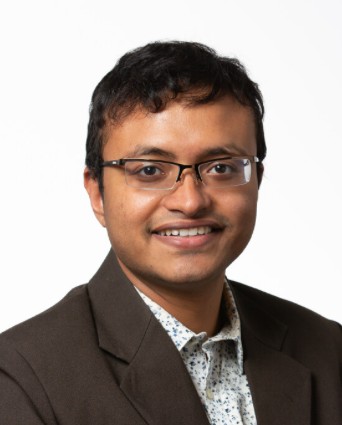
SPEAKER: Dr. Tapajyoti Ghosh, Assistant Professor, WSU Institute of Northwest Energy Futures and the Voiland School of Chemical Engineering and Bioengineering
BIOGRAPHY:
Dr. Tapajyoti (TJ) Ghosh is an Assistant Professor in the Voiland School of Chemical Engineering and Bioengineering at Washington State University Tri-Cities and a faculty member of the Institute for Northwest Energy Futures (INEF), where he leads the SEED Lab (Sustainable Engineering and Ecological Design). He earned his Ph.D. in Chemical Engineering from The Ohio State University, held a postdoctoral fellowship at the MIT Energy Initiative, and spent six years as a Senior Research Scientist at the U.S. Department of Energy’s National Renewable Energy Laboratory (NREL). His research develops computational frameworks that integrate life cycle assessment, techno-economic analysis, optimization, and artificial intelligence to design energy and industrial systems that are environmentally sustainable, economically viable, and socially equitable.
ABSTRACT:
Chemical engineers are increasingly asked not only to make processes efficient and economical, but to make them demonstrably sustainable across their full life cycle and against the finite limits of the planet. Meeting that expectation requires reasoning simultaneously across scales that span from molecular thermodynamics and unit operations to supply chains, regional economies, and global ecosystems. In this talk, I will trace a body of work built around that idea. I will begin with the Process-to-Planet (P2P) framework, which embeds life cycle assessment directly inside process optimization, and the Techno-Ecological Synergy (TES) framework, which evaluates engineered systems against absolute planetary boundaries and ecosystem carrying capacities rather than relative improvements alone. I will then show how these ideas scale into practice through open-source tools developed during my time at NREL and MIT: LiAISON, an AI- and LLM-powered platform that automates life cycle inventory construction and impact assessment; dynamic material-flow models for the circular economy of wind, solar, and plastics; and integrated life cycle and techno-economic frameworks for decarbonization pathways.
Building on this foundation, I will sketch the directions I am pursuing at WSU and INEF, from life cycle and techno-economic analysis of Pacific Northwest energy systems (hydrogen, sustainable aviation fuels, advanced nuclear) to AI-driven sustainability analytics and critical-materials recovery