CHE 598 Seminar: Excess Electron Density at the Metal or Ligand in Actinide Compounds: Insights into Metal-Ligand Bonding and Reactivity
About the event
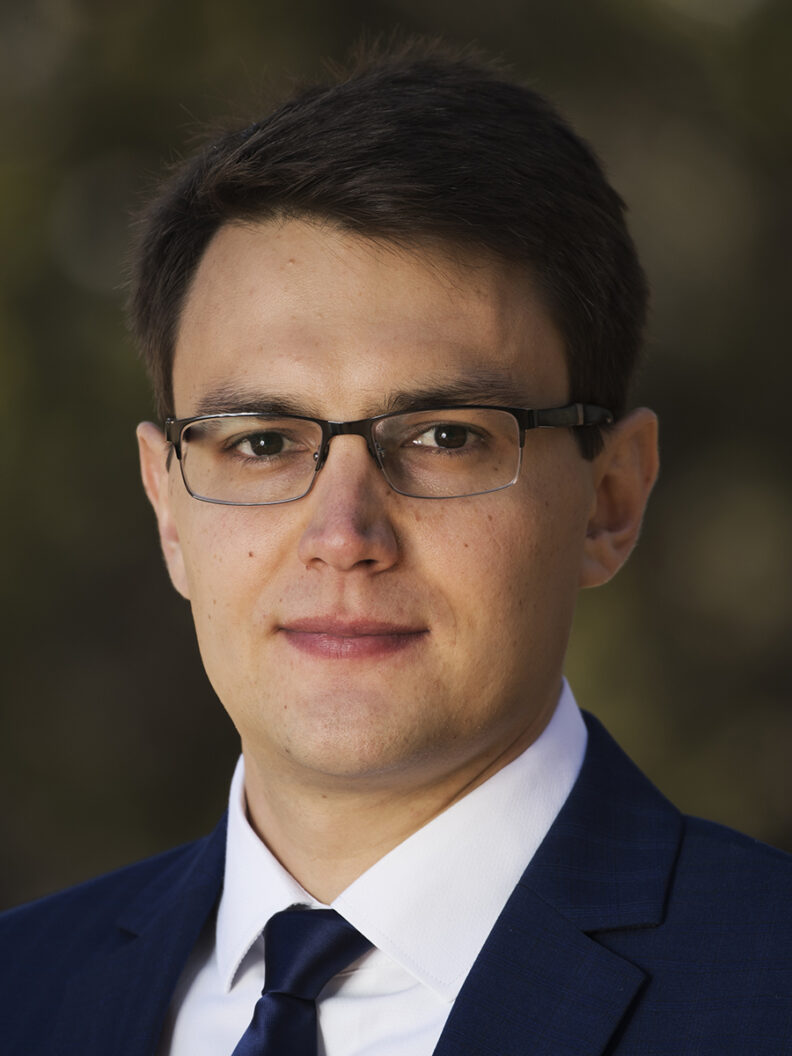
SPEAKER: Dr. Ivan Popov, Assistant Professor, Department of Chemistry, WSU
BIOGRAPHY:
Ivan A. Popov received his B.S. and M.S. with honors in chemistry from RUDN University, Russia, Moscow. In 2011, Ivan moved to the United States to pursue his education under the supervision of Prof. Alexander I. Boldyrev at Utah State University, where he obtained his Ph.D. in Theoretical Physical Chemistry. Ivan joined Theoretical Division at Los Alamos National Laboratory in June 2017 as a Director’s Postdoctoral Fellow, and later in February 2018, Ivan was awarded J. R. Oppenheimer Distinguished Postdoctoral Fellowship. In 2021, Ivan started his independent career as an Assistant Professor at the University of Akron (UA), where he spent three years before joining the Department of Chemistry at Washington State University (WSU). In 2023, Ivan received federal funding from the National Nuclear Security Administration (NNSA) to work in the Transuranic Chemistry Center of Research Excellence (TRUCoRE) on modeling of actinide compounds in extreme oxidation states and transuranic hydrides. Ivan has also been recognized at the department levels receiving the Buchtel College of Arts and Sciences Early Research and Creativity Award at the UA and Meyer Early Career Launch Fellowship at WSU.
ABSTRACT:
Separating heavy elements is one of the key challenges in nuclear waste management. Gaining a deeper understanding of actinide (An)-ligand interactions—across both low and high oxidation states— from an electronic structure perspective is crucial for designing more efficient ligands for nuclear separation chemistry. In low-valent actinide complexes, increased reactivity at the An center can lead to decomposition or disproportionation reactions. This can be controlled through careful modification of the ligand architecture, including steric bulk, the ligand’s ability to accommodate excess electron density from the metal, intercalated counterions in the second coordination sphere, and electron-withdrawing groups. In high oxidation states, as the An orbitals decrease in energy, competition between the metal and ligand orbitals can result in increased reactivity at the ligand site, potentially triggering proton-coupled electron transfer reactions. This presents an opportunity to investigate metal-ligand covalency in oxidized, reduced, and protonated species in relation to their reactivity across multiple An oxidation states. Additionally, the correlation between bond dissociation free energy, pKa values, and redox potentials can be explored. In this talk, I will discuss collaborative theoretical and experimental efforts aimed at understanding the reactivity and bonding of several low-valent An-arene and high-valent An-imidophosphorane compounds.