CHE 598 Seminar: Heterochiral DNA Strand Displacement for Biomedical Applications
About the event
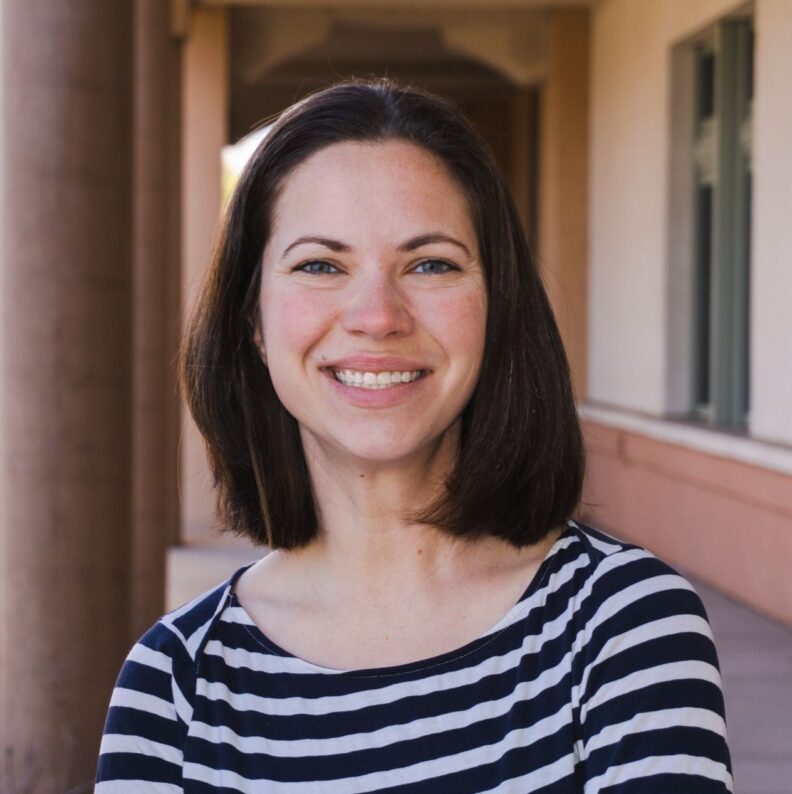
SPEAKER: Dr. Tracy Mallette, Postdoc, Paul G. Allen School of Computer Science and Engineering, University of Washington
BIOGRAPHY:
Tracy Mallette researches nucleic acid based therapeutics and robust molecular circuits for disease detection. She earned her PhD in Biomedical Engineering from the University of New Mexico where her dissertation research with Dr. Matthew Lakin created a new circuit architecture utilizing heterochiral DNA strands containing both natural D-DNA and mirror L-DNA. As a postdoctoral scholar at the University of Washington, she worked with Dr. Chris Thachuk to explore the strand displacement kinetics and thermodynamic binding parameters of DNA/RNA hybrids, including hybrids with chemically modified nucleic acids.
As part of her broader contribution to science, Tracy regularly volunteers for outreach programs, teaching coding and engineering workshops to girls and underrepresented youth. She began and led a monthly “Senior Science” series for low-income seniors in Seattle covering topics from urban birding to the gut microbiome. She is currently on the program committee for the International Conference on DNA Computing and a member of the Oligonucleotide Therapeutics Society. Prior to academia, Tracy spent six years in industry at L’Oreal USA, where she managed large-scale engineering projects and teams.
ABSTRACT:
Nucleic acid based molecular computing has widespread potential as a research tool and for biomedical applications like disease detection or treatment. However, DNA based molecular computers are susceptible to degradation by nucleases in biological media limiting their practical implementation. Many chemical modifications that can protect nucleotides also have significant cytotoxic side effects and must be carefully designed into the strands. A novel way to protect against nuclease-mediated degradation is through the use of mirror-image, left-handed nucleotides which twist to the left, as opposed to the right-handed twist of natural DNA (D-DNA). This enantiomer of natural DNA (L-DNA) is thought to have low cytotoxicity and immunogenicity and have the same hybridization and thermodynamic properties of natural DNA.
This seminar will discuss our work to develop unique DNA complexes that contain portions of natural D- and mirror-image L- DNA, called heterochiral DNA. We have used this heterochiral DNA to build dynamic, logic-based DNA computing circuits that can link an L-DNA bioorthogonal computing system to the natural, right-handed world of biology. The designs were optimized through multiple iterations to be resistant to nuclease-mediated degradation and the improvements culminated in a demonstration of heterochiral DNA in cells. In addition, this seminar will briefly highlight future directions of DNA nanotechnology, including recent debate surrounding L-DNA.