CHE 598 Seminar: Self-Playing Microbes: Reinforcement Learning of Metabolic Interactions and Regulations in Microbial Communities
About the event
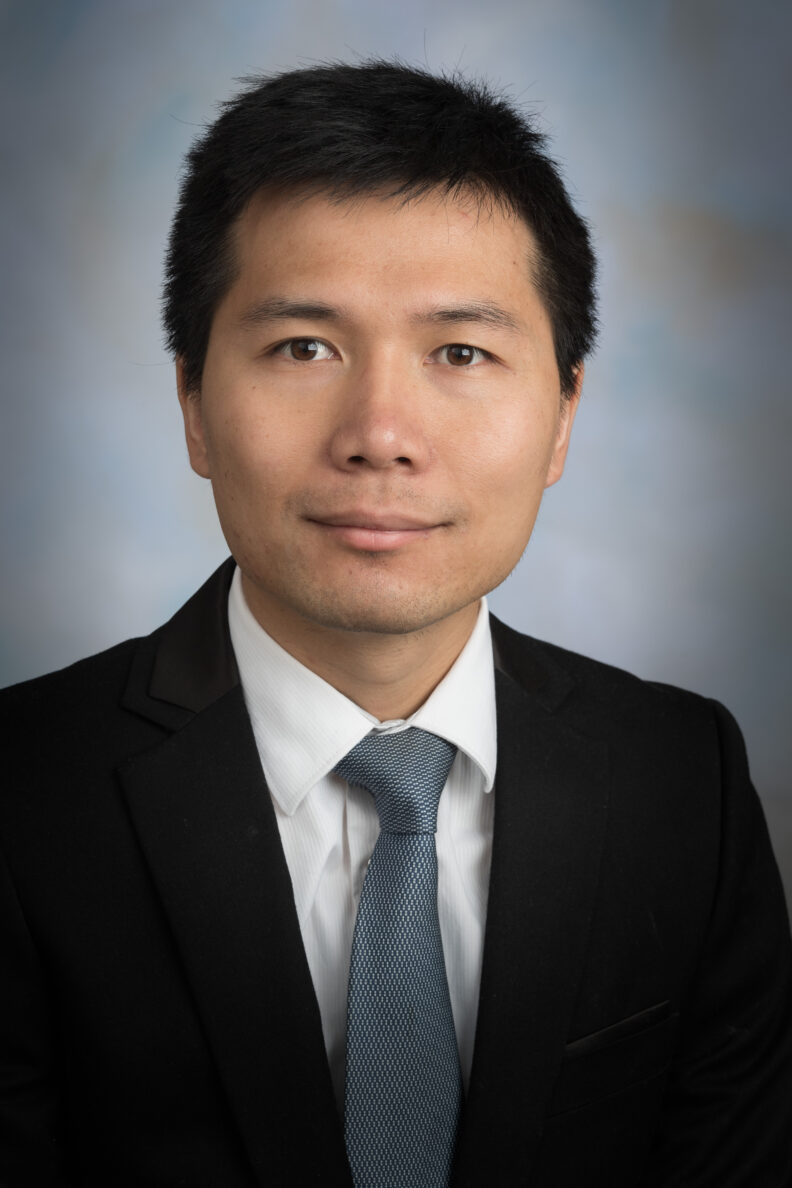
SPEAKER: Dr. Joshua Chan, Assistant Professor, Department of Chemical & Biological Engineering, Colorado State University
BIOGRAPHY:
Joshua Chan is an Assistant Professor in the Department of Chemical and Biological Engineering at Colorado State University. His research focuses on predicting microbiome metabolism using metabolic models. He works on the microbiome in different systems including the human gut, anaerobic digestion, and soil. He obtained his Bachelor of Science in Mathematics and Physics at the University of Hong Kong and Master of Philosophy in Systems Engineering at the Hong Kong Polytechnic University. He finished his Ph. D. in Microbial Biotechnology under the supervision of Peter Ruhdal Jensen at the Technical University of Denmark. Prior to joining Colorado State University in 2018, Dr. Chan worked as a postdoctoral research scholar in Costas Maranas’s group at the Pennsylvania State University.
ABSTRACT:
Microbial communities and their metabolic processes have a fundamental impact on all ecosystems. While metagenomics reveals the composition and functional potential of these communities, predicting their metabolic interactions, stability, and evolution remains a major challenge. Traditional modeling approaches like Flux Balance Analysis (FBA) and dynamic FBA (dFBA) provide useful insights but rely on assumptions such as instantaneous biomass maximization, which limits their ability to predict long-term stable interactions in microbial communities.
In this talk, we will introduce a novel approach that integrates reinforcement learning with metabolic modeling. This method enables microbial agents to evolve and adapt their metabolic strategies through self-play in silico, optimizing long-term fitness in dynamic and competitive environments. Our approach successfully captures complex microbial behaviors, such as cooperative metabolite exchange in auxotrophs, their adaptation to non-cooperation in nutrient-rich environments, and the impact of cheating in a community setting, providing new insights into microbial community dynamics. We also applied the reinforcement learning approach to a microbial kinetic model for predicting resource allocation in a dynamically changing environment. The results are consistent with well-known biological observations including storage metabolite accumulation and the advantage of a molecular circadian clock.