Voiland School Seminar: In-situ Advanced Characterization of Electrochemical Energy Materials
Passcode: 398084
About the event
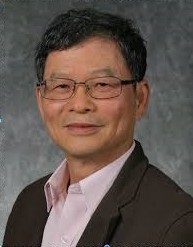
SPEAKER: Dr. Bing Joe Hwang, Chair & Professor, Department of Chemical Engineering at National Taiwan University of Science and Technology
BIOGRAPHY:
Professor Bing Joe Hwang received his Ph.D. in chemical engineering from the National Cheng Kung University in 1987. He is currently the Chair Professor in the Department of Chemical Engineering at the National Taiwan University of Science and Technology (Taiwan Tech) and the President of Taiwan Institute of Chemical Engineers (TwIChE). His research has spanned various subjects, from electrochemistry to spectroscopy, interfacial phenomena, materials science, and theoretical chemistry. He has established both experimental and computational strategies for developing electrochemical energy materials and understanding interfacial phenomena. His work has led to a better understanding of electrochemical reaction mechanisms and improved ability to discover the properties of potential new materials for batteries, fuel cells, and hydrogen production. He shows excellence in research activities with 550 peer-reviewed publications, 80 issued patents, 43408 times citations, and an H-index of 102. He is also the Founder Director of Sustainable Electrochemical Energy Development Center (Taiwan Tech), Adjunct Researcher of National Synchrotron Radiation Research, and the Executive Editor of the journal of ACS Sustainable Chemistry & Engineering. Professor Hwang has received many recognitions, including Member of the Academy of Europe (2025), Clarivate Analytics Highly-cited Researcher (2022-2024), ISE-Elsevier Prize for Experimental Electrochemistry (2022); Humboldt Research Award (2020), Lifetime National Chair Professorship in Engineering and Applied Science (Since 2020), Distinguished Professor of Engineering (2020), National Chair Professorship (2018) and Academic Award (2010) in Engineering and Applied Science, Fellow of Materials Research Society of Taiwan (MRS-T)(2023), Fellow of the Royal Society of Chemistry (FRSC) (2018), Fellow of the Taiwan Institute of Chemical Engineers (TwIChE) in 2018, Academician of Asian Pacific Academy of Materials (APAM) in 2017, Fellow of International Society of Electrochemistry (FISE) in 2014, Outstanding Research Fellow of National Science Council in 2011, Academician of the Academy of Sciences of Lisbon in 2011, three times awarded Outstanding research award from National Science Council of Taiwan, and many more. In addition, Professor Hwang served in essential positions in multiple research and academic societies, including the Founder and President of The Electrochemical Society of Taiwan, Coordinator of the Program of Chemical Engineering in the National Science and Technology Council (NSTC), President of the Chinese Association of Chemical Sensors and Technology in Taiwan, and President of The Society of Hydrogen and Fuel Cells of Taiwan
ABSTRACT:
In situ investigation of the formation and structural transformation mechanisms together with their electronic transitions of advanced materials during their preparation and operation, offers insights into the design of new materials with improved performance for electrochemical energy conversion systems. First a brief introduction to in situ spectroscopic techniques will be given, this will be followed by a discussion of the use of in situ spectroscopies to elucidate the formation and functional mechanisms of several advanced materials for electrochemical energy conversion reactions – for example the formation mechanisms of bimetallic nanoparticles (b-NPs) or single atom catalysts (SACs) for energy conversion studied by in situ spectroscopic techniques. Such approaches allow the monitoring of changes in the alloying extent and surface composition of b-NPs or local structural transformation of active sites, during the course of synthesis and catalytic reactions, both of which are pivotal in electrochemical energy conversion systems. By the use of such spectroscopic methods as discussed here our understanding of the electrocatalytic mechanisms in electrochemical conversion systems can be advanced in a rational manner to improve the performance of energy conversion system