CHE 598 Seminar: Toward Efficient Catalysts for Energy Conversion: From Enzymatic Function to Functional Mimics
About the event
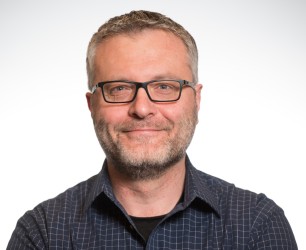
SPEAKER: Dr. Simone Raugei, Computational Scientist, Pacific Northwest National Laboratory (PNNL)
BIOGRAPHY:
Simone Raugei earned his B. Sc. in Chemistry at the University of Florence and a PhD in Chemistry from the University of Florence and the Max Planck Institute for Solid State Physics in Stuttgart. After a postdoctoral at the University of Pennsylvania, Raugei spent eight years at the International School for Advanced Studies in Trieste, first as an assistant professor and then as an associate professor, where he led a theoretical and computational effort aimed at understanding enzymatic processes that are targets for pharmacological intervention in human diseases. In 2010, Raugei joined the Pacific Northwest National Laboratory. He is the principal investigator of the PNNL/DOE Physical Biosciences Program. The program is focused on uniquely characterizing the critical biochemical and biophysical features of enzymatic processes related to producing a suite of small sustainable energy carriers. In addition, Raugei is a co-PI for the Institute for Integrated Catalysis’s crosscutting theory and computation thrust, where he leads theoretical efforts to design catalysts for energy storage and energy delivery based on inexpensive transition metals, Raugei is also a research professor at the Institute of Biological Chemistry, Washington State University, and an adjunct professor at the German School for Simulation Sciences, Aachen. Raugei received the ACS Catalysis Lectureship for the Advancement of Catalytic Science (2015) as part of the PNNL Hydrogen Catalysis Team.
ABSTRACT:
Enzymes represent an invaluable source of inspiration for improving catalytic processes. In this talk, I will highlight how theory and computation, tightly integrated with experiment, help elucidate enzymatic functionalities germane to activating energy-relevant small molecules and how these concepts can help design selective, efficient, and sustainable bio-inspired catalysts. In the first part of the talk, I will discuss how hydrogenase enzymes finely regulate electron and proton movements and how this understanding can drive the design of new electrocatalysts for H2 oxidation and production. Taking a step further, in the second part, I will illustrate a few examples of how enzymes can be redesigned to obtain control of product outcomes.