CHE 598 Seminar: On-line Feedback Control Of Human Mesenchymal Stem Cell Chondrogenesis
About the event
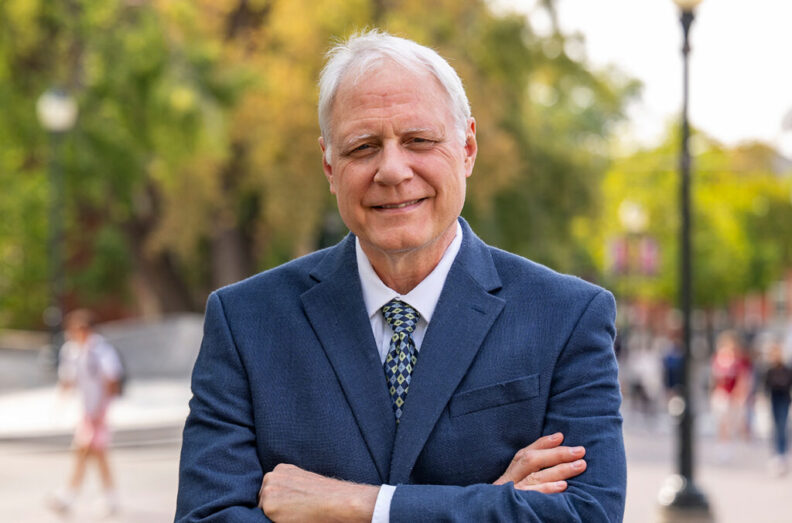
SPEAKER: Dr. Bernard Van Wie
BIOGRAPHY:
Dr. Bernard Van Wie is a full Professor in the Voiland School of Chemical Engineering and Bioengineering at Washington State University. Dr. Van Wie received his BS, MS and Ph.D. degrees in Chemical Engineering from Oklahoma University. After working as a postdoc for 1 year, he joined WSU and has continued to serve as a faculty member with the WSU Voiland School for the past 42 years and was a recent recipient of the Donald R. Woods Lectureship Award for Lifetime Achievement in Chemical Engineering Pedagogy. The primary focus of Dr. Van Wie’s lab is the study of new and better biosensors and bioanalytical platforms. Since completing a sabbatical at the Naval Research Laboratory in 2000-2001, Dr. Van Wie has begun a collaboration to create hand-held and rapid-sensing devices for identifying and quantifying minute concentrations of persistent toxins in lakes and streams, of metabolites in the human body for disease diagnosis, and of antibodies, other products, and metabolites in cell culture processes for understanding the immune response and cell differentiation.
ABSTRACT:
Regenerating functional articular cartilage from stem cells remains challenging. As annual US costs for osteoarthritic-related treatments are $140 billion, we aim to enhance tissue engineering by directing mesenchymal stem cells (MSCs) toward a chondrogenic lineage, arresting differentiation in this state to move tissue constructs in the direction of a functionally organized articular cartilage extracellular matrix (ECM), and preventing advancement toward osteogenesis. In this talk data will be presented to support our hypothesis that we can direct cell proliferation and differentiation by feedback control of critical bioprocess shear stresses, growth factor concentration, oscillating hydrostatic pressure (OHP) and gene silencing. A team of WSU and Cornell University investigators are working to interrogate MSC maturation with a fiber optic bundle to sense, in real-time, co-upregulation of Sox9 mRNA, critically involved in orchestrating chondrogenesis, and Runx2 mRNA, which if overexpressed will promote unwanted progression toward hypertrophic calcification. Our objectives are to: 1) validate the MSC and chondrogenic transcriptome and endpoint tissues, monitor a multi-chamber bioreactor via fluorescent reporter gene signals and create a dynamic control system to regulate chondrogenesis; and 2) use on-line real-time feedback control to adjust perfusion enhanced shear stresses, TGF-β3 growth factor, OHP and Runx2 silencing to demonstrate success in promoting robust ECM production moving it toward a tri-layered articular cartilage